
Keep shoppers in the building
A dead phone ends a shopping trip. Stations at entrances and food courts keep people moving through the space instead of heading home.
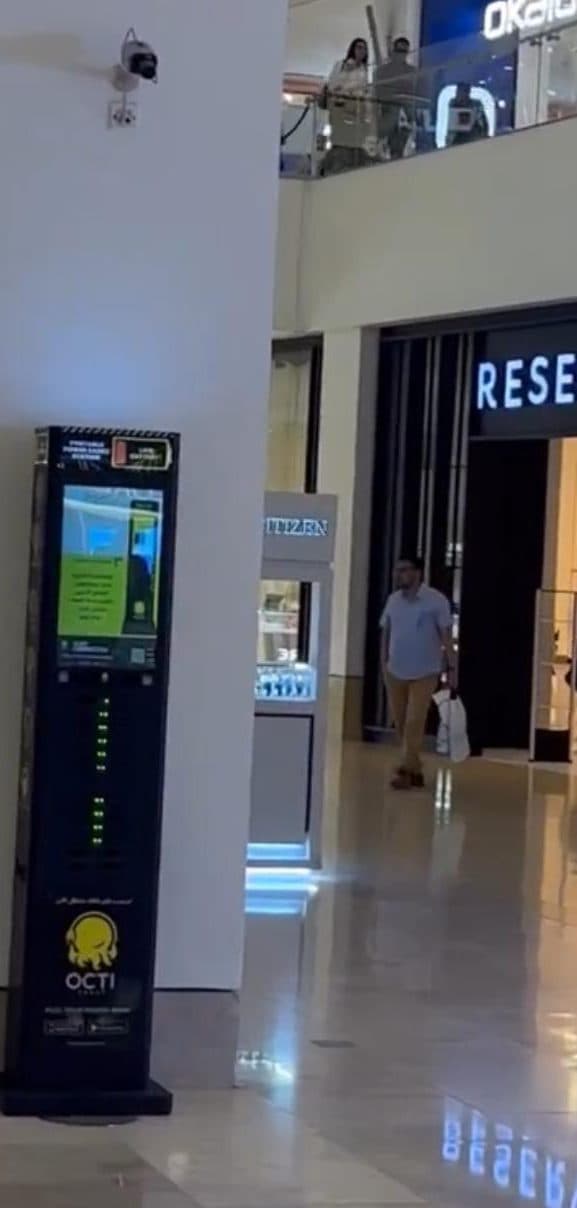
Why it works for malls & retail
- Higher footfall retention at the hours that matter most
- A service tenants can point their own customers to
- Placement data showing which entrances actually get used
The problem here
A mall visit ends when the phone does. Not because anyone decides to leave, but because the phone is the wallet, the parking ticket, the car's location and the person you came with — and once it is at 5% the visit quietly turns into getting home. Whatever a visitor had not bought yet, they do not buy. The centre sees it as an early afternoon dip that no tenant can explain.
Where the station goes
Entrances and the food court, for opposite reasons. At an entrance the station is seen on the way in, which is when a visitor still has a whole visit ahead of them to protect. At the food court they are already sitting down with time to spare, which is when they will actually stop and borrow. A third by the cinema or the family entertainment floor covers the longest dwell of the day.
What this takes from you
What it takes from the centre is floor space and a decision about where. OctiVault supplies, installs and services the hardware and keeps it stocked, so there is no capital outlay, nothing to procure and nothing for facilities management to maintain. The commercial side is agreed with you rather than offered as a package — some centres want charging free to the visitor, some want it to contribute, some want it simply handled — and different parts of the same mall do not have to work the same way.
Where we have done this
OctiVault runs a permanent station at Misr Italia Properties' Garden 8 in New Cairo — the one you can go and see.
What managers ask
- How much floor space does it take?
Roughly the footprint of a vending machine's narrower cousin — it stands against a wall or a column and does not need clearance around it beyond room for one person to stand and scan. Where floor space is genuinely contested, a counter-top unit at a tenant's till covers the same need in a fraction of the area.
- Who is liable if a unit is stolen or damaged?
OctiVault. The hardware is ours, the rental agreement is between us and the person who borrowed it, and a unit that is not returned is charged to the card they saved to borrow it. The centre carries no equipment risk and is not asked to hold a deposit, keep a register or arbitrate a dispute.
- Can tenants point their own customers to it?
Yes, and they usually do once it is there — it is an amenity they can offer without installing or maintaining anything. A station near a tenant's entrance tends to get described as that tenant's service, which is generally fine for everyone.
Plan your placement
Once you know what fits your guests, review the placement options, operating responsibilities and practical requirements in our hosting guide.
Review hosting detailsIs your venue a different shape?
Airports & transit hubs
A traveler waiting for a gate or a train has nowhere else to go and every reason to want charge before boarding — the longest dwell time and the highest-stakes need of any venue type.
Read moreCafés & restaurants
A station near the till or by the seating area gives people a reason to settle in rather than leave to find a charger.
Read moreHotels & resorts
Guests take a power bank to the beach, the pool or an excursion and return it at reception — or at any other OctiVault station.
Read moreOffices & workplaces
Staff, visitors and everyone in for a meeting arrive with whatever charge they woke up with. A station in reception or by the meeting rooms covers all three without another drawer of tangled cables.
Read moreUniversities
Students are on campus for eight hours with a phone that lasts five. Stations in libraries and student centres cover the gap.
Read more